



Table of Contents
The AI Hype Cycle and Inflationary Pressures
It's 2026, and we're knee-deep in the AI revolution. Promises of unprecedented productivity gains and economic transformation are everywhere. But beneath the surface of the AI boom, a more complex reality is emerging: the potential for artificial intelligence to actually fuel inflation. Let's unpack this. The initial hype surrounding AI has driven massive investment, particularly in the semiconductor industry. Bloomberg reported that AI hyperscalers, fueled by huge AI spending, accounted for over 60% of the S&P 500's growth. This intense demand is pushing up prices for memory chips, GPUs, and other critical components. Think of it like the California Gold Rush – everyone's rushing to stake their claim, driving up the cost of shovels, land, and everything else needed to participate.
Furthermore, the talent war for skilled AI engineers and data scientists is escalating wages. Companies are willing to pay exorbitant salaries to attract and retain top talent, adding to their operational costs. This wage inflation trickles down, impacting the prices of AI-powered products and services. Remember the summer of 2024, at that AI conference in Austin? I overheard two VCs casually discussing poaching each other's entire data science teams with offers that were, frankly, insulting to anyone making a normal salary. That kind of behavior warps the entire market.
It's not just about the direct costs either. The energy consumption of AI models, especially large language models (LLMs), is a growing concern. Training these models requires vast amounts of electricity, contributing to higher energy bills for companies and, potentially, increased energy prices for consumers in the long run. One estimate I saw suggested that training a single large language model could generate as much carbon emissions as several transatlantic flights. That's unsustainable, and somebody's going to pay for it, eventually.
The initial rush to adopt AI is creating artificial scarcity in key resource areas (chips, talent, energy), driving up costs and contributing to inflationary pressures across the broader economy.
AI-Driven Deflation: Where the Savings Actually Are
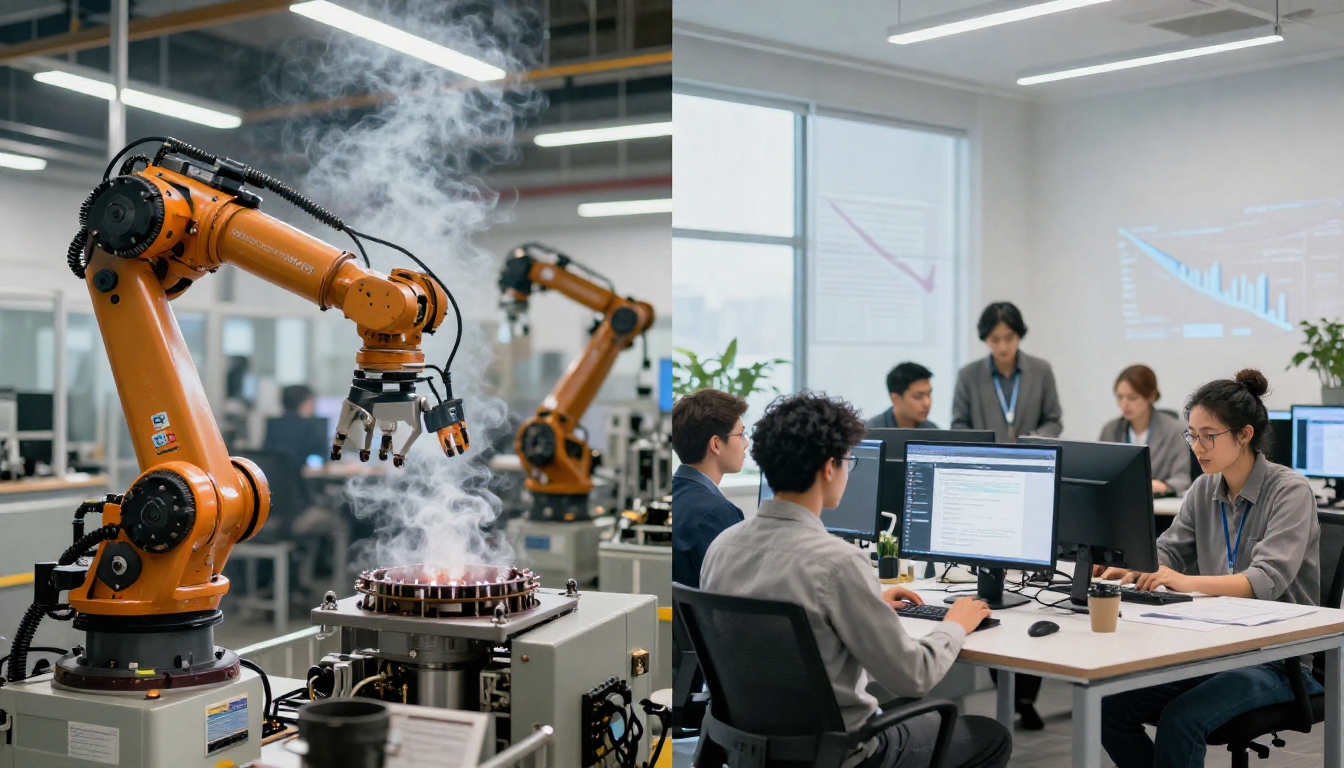
Okay, so it's not all doom and gloom. While some aspects of AI adoption are inflationary, there's also a strong case to be made for AI as a deflationary force. The key lies in automation and increased efficiency. AI-powered systems can automate repetitive tasks, reduce errors, and optimize processes across various industries. This leads to lower labor costs, reduced waste, and increased output.
Consider manufacturing. AI-powered robots can perform assembly line tasks with greater precision and speed than human workers, leading to significant cost savings. Similarly, in customer service, AI-powered chatbots can handle a large volume of inquiries, freeing up human agents to focus on more complex issues. I remember reading a report about a major logistics company that implemented AI-driven route optimization, resulting in a 15% reduction in fuel consumption. That's a direct cost saving that translates into lower prices for consumers. According to Bloomberg Economics' Anna Wong, AI will be deflationary for the economy over the next two-to-five years.
However, the benefits of AI-driven deflation are not evenly distributed. Some industries are better positioned to take advantage of AI automation than others. And the displacement of human workers due to automation can lead to social and economic challenges, potentially exacerbating income inequality. That's the real kicker. While AI might lower the price of your widgets, it might also cost you your job. It's a trade-off, and one we need to be very mindful of.
The Hidden Costs: AI Implementation and Maintenance
Here's where things get really interesting. The shiny brochures and flashy demos often gloss over the less glamorous aspects of AI: the hidden costs of implementation and maintenance. Building and deploying AI systems is not a one-time investment. It requires ongoing monitoring, maintenance, and updates. AI models can degrade over time as the data they were trained on becomes outdated. This phenomenon, known as "model drift," can lead to inaccurate predictions and suboptimal performance. Just last year, I consulted with a retail chain that spent a fortune on an AI-powered inventory management system, only to discover that it was completely useless after a major shift in consumer preferences. The model was trained on pre-pandemic data and couldn't adapt to the new reality. It was a total waste of money.
Moreover, AI systems are vulnerable to security breaches and cyberattacks. Hackers can exploit vulnerabilities in AI algorithms to manipulate data, steal sensitive information, or disrupt operations. The cost of preventing and mitigating these risks can be substantial. You need to factor in the cost of cybersecurity experts, security software, and incident response plans. Ignoring these hidden costs can quickly erode the potential savings from AI automation. And don't even get me started on the ethical considerations.
Before investing in AI, conduct a thorough cost-benefit analysis that takes into account not only the direct costs of implementation but also the indirect costs of maintenance, security, and ethical compliance.

Sector-Specific Impacts: Winners and Losers in the AI Economy
The impact of AI on inflation will vary significantly across different sectors of the economy. Some industries are likely to benefit from AI-driven deflation, while others may face inflationary pressures. Let's take a closer look.
Winners:
- Technology: Companies that develop and deploy AI technologies are likely to see increased demand for their products and services, leading to higher revenues and profits.
- Manufacturing: AI automation can significantly reduce labor costs and increase efficiency in manufacturing, leading to lower prices for consumers.
- Logistics: AI-powered route optimization and supply chain management can reduce transportation costs and improve delivery times.
Losers:
- Labor-intensive industries: Industries that rely heavily on human labor, such as retail and customer service, may face job losses due to automation.
- Commodity producers: AI-driven efficiency gains in resource management could lead to lower demand for raw materials, putting downward pressure on commodity prices.
- Sectors reliant on specialized chips: The intense demand for chips to power AI models will disproportionately affect any industry already reliant on cutting-edge semiconductor technology.
Consider the healthcare sector. AI-powered diagnostic tools and personalized medicine could improve patient outcomes and reduce healthcare costs. However, the high cost of developing and implementing these technologies could also put upward pressure on healthcare prices. I believe that, for the next few years, that sector is poised to remain on the expensive side of the equation.
A recent study by McKinsey found that AI could add $13 trillion to the global economy by 2030, but also warned of potential job losses and income inequality.
The Role of Regulation and Ethical AI Development
Ultimately, whether AI becomes a force for inflation or deflation will depend on how we manage its development and deployment. Governments and policymakers have a critical role to play in shaping the AI landscape. Effective regulation can help to mitigate the risks of AI-driven inflation and ensure that the benefits of AI are shared more equitably. This includes investing in education and training programs to prepare workers for the changing job market, as well as implementing policies to promote responsible AI development and prevent bias in AI algorithms.
We also need to address the ethical implications of AI. AI systems should be transparent, accountable, and fair. They should not discriminate against certain groups of people or violate privacy rights. Companies that develop and deploy AI technologies have a responsibility to ensure that their systems are used ethically and responsibly. I'm increasingly worried, honestly, about the lack of serious ethics oversight in the AI space. It feels like we're building a rocket ship without bothering to install any safety features. This could end very badly.
The future of AI and inflation is uncertain, but one thing is clear: we need to be proactive in addressing the challenges and opportunities that AI presents. By fostering innovation, promoting responsible AI development, and investing in education and training, we can harness the power of AI to create a more prosperous and equitable future for all. Or, we can ignore the warning signs and sleepwalk into an AI-driven inflationary spiral that makes the 1970s look like a picnic. The choice is ours.
The Algorithmic Tightrope: Walking the Line Between AI Boom and Economic Bust
AI isn't inherently inflationary or deflationary. It's a tool. And like any tool, it can be used to build or destroy. It’s up to us to decide which outcome we want, but frankly, the current trajectory looks more like chaos than control.
Disclaimer: The information provided in this blog post is for general informational purposes only and does not constitute professional financial or economic advice. The views and opinions expressed are those of the author and do not necessarily reflect the views or opinions of any organization or institution. Readers should consult with a qualified professional before making any financial decisions.
```