



Table of Contents
- The AI Reality Check of 2026: Beyond the Hype
- Case Study: Streamlining Supply Chains with Predictive AI
- The Human-AI Collaboration Advantage: A Manufacturing Example
- Re-Skilling for the AI Era: A Key to Deflationary Success
- Beware the AI "Productivity Black Hole"
- The Future is Frugal: Embrace Efficiency
The AI Reality Check of 2026: Beyond the Hype
Remember the breathless predictions of 2023? AI was going to solve *everything*. Fast forward to 2026, and we're seeing a much more nuanced picture. The initial gold rush, fueled by over $180 billion in venture funding between 2023 and 2025, has given way to a harsh reality: not all AI is created equal, and throwing money at AI doesn't guarantee success. The "AI bubble" many predicted has arguably burst, leaving behind a landscape where efficiency and demonstrable ROI are king. Companies that are thriving now aren't necessarily the ones with the biggest AI budgets, but rather those that have strategically deployed AI to combat deflationary pressures. They’re not chasing the shiniest new algorithms; they're focusing on solving concrete business problems with existing – and often less flashy – AI solutions. Think of it like this: buying a Formula 1 car doesn't make you a race car driver. You need training, strategy, and a track to race on. The same applies to AI.
One clear trend emerging is the increasing importance of *deflationary* AI – AI that directly reduces costs and increases productivity. This isn’t about replacing entire workforces; it's about augmenting human capabilities and automating repetitive tasks, freeing up employees to focus on higher-value activities. And let's be honest, in the current economic climate, every dollar saved goes straight to the bottom line.
The AI landscape has matured. In 2026, successful AI implementations are driven by practical problem-solving and a focus on demonstrable deflationary impact, not just hype and venture capital.
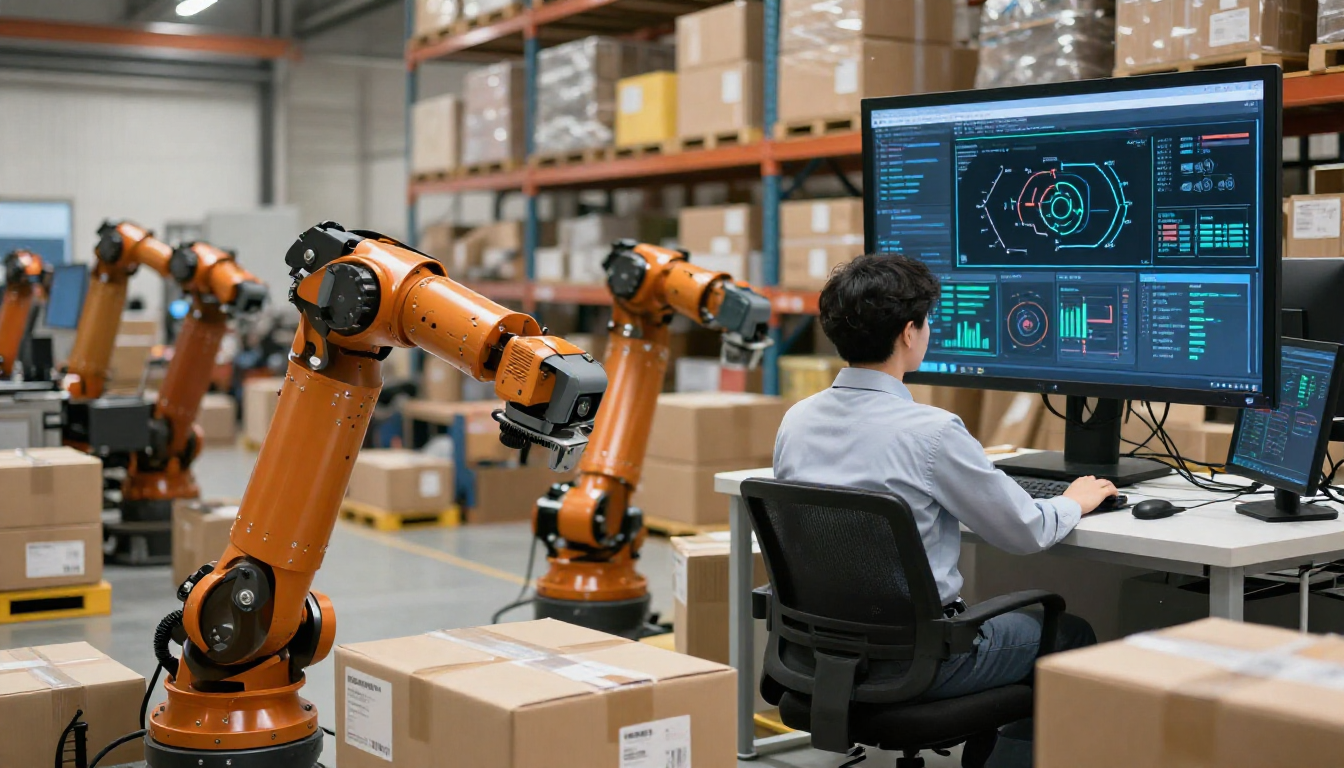
Case Study: Streamlining Supply Chains with Predictive AI
Consider the case of "Global Logistics Solutions" (GLS), a fictional but representative company operating in the increasingly cutthroat logistics industry. In the summer of 2024, at a crucial board meeting in their Singapore headquarters, the mood was tense. Margins were shrinking, fuel costs were unpredictable, and customer expectations were higher than ever. Their existing supply chain management system, a patchwork of spreadsheets and legacy software, was simply no longer cutting it. Delays were rampant. In fact, in July of that year, a shipment of crucial medical supplies was delayed for 72 hours due to a miscalculation of weather patterns and traffic congestion, causing both financial loss and reputational damage.
GLS decided to invest in a predictive AI platform specifically designed for supply chain optimization. This platform analyzed vast amounts of data – weather forecasts, traffic patterns, geopolitical events, historical shipping data, and even social media sentiment – to predict potential disruptions and proactively reroute shipments. The results were dramatic. Within six months, GLS reduced shipping delays by 30%, lowered fuel consumption by 15% (a huge saving given volatile fuel prices), and improved overall supply chain efficiency by 20%. This translated into millions of dollars in savings and a significant competitive advantage. In contrast, competitors who remained stuck with outdated systems struggled to maintain profitability.
Don't try to build a custom AI solution from scratch unless you have deep in-house expertise. Focus on leveraging existing AI platforms and tools that are specifically designed for your industry. Often, the best solution is integrating several smaller AI tools rather than attempting a single, monolithic project.

The Human-AI Collaboration Advantage: A Manufacturing Example
AI isn't just about automating tasks; it's also about augmenting human capabilities. This is particularly evident in the manufacturing sector. "Precision Manufacturing Inc." (PMI), a mid-sized aerospace component manufacturer, was facing intense pressure to reduce costs and improve quality. Their defect rate was hovering around 5%, which was unacceptable for the highly regulated aerospace industry. They tried everything: Six Sigma, Lean Manufacturing, even expensive consultants. Nothing seemed to move the needle significantly.
PMI implemented an AI-powered quality control system that analyzed real-time data from sensors embedded in their manufacturing equipment. This system could detect subtle anomalies that human inspectors might miss, allowing them to identify and correct defects *before* they became major problems. But the key to their success wasn't just the AI itself; it was the way they integrated it with their existing workforce. Instead of replacing human inspectors, the AI system provided them with actionable insights, allowing them to focus on the most critical areas and make more informed decisions. The inspectors, initially skeptical, became enthusiastic proponents of the system once they saw the improvements in quality and their own productivity. Within a year, PMI reduced its defect rate to below 1%, significantly lowered its production costs, and gained a reputation for superior quality, leading to increased orders and higher profits. The humans weren't replaced; they were *enhanced*.
Here’s a breakdown of PMI's cost savings:
| Area | Old Cost (per unit) | New Cost (per unit) | Savings (per unit) |
|---|---|---|---|
| Raw Materials Waste | $50 | $25 | $25 |
| Rework Labor | $30 | $5 | $25 |
| Scrap Disposal | $10 | $2 | $8 |
| Warranty Claims | $20 | $5 | $15 |
| Total | $110 | $37 | $73 |
Don't assume that AI can simply replace human workers. The most successful AI implementations involve a collaborative approach, where AI augments human capabilities and frees up employees to focus on higher-value activities. Neglecting the human element is a recipe for disaster.
Re-Skilling for the AI Era: A Key to Deflationary Success
The rise of AI inevitably leads to job displacement, but it also creates new opportunities. The key to navigating this shift is re-skilling the workforce. Companies that proactively invest in training their employees to work alongside AI will be best positioned to thrive in the deflationary AI era. This isn't just about teaching people how to code; it's about developing skills that are complementary to AI, such as critical thinking, problem-solving, creativity, and communication. I remember back in 2024, I scoffed at the idea of needing to learn "prompt engineering." Now, in 2026, it's a core skill for almost every role.
"FutureSkills Academy," a forward-thinking educational institution, recognized this trend early on. They partnered with several large corporations to develop customized training programs that focused on equipping employees with the skills they needed to succeed in an AI-driven workplace. These programs included courses on data analysis, AI ethics, human-machine collaboration, and design thinking. The results were impressive. Graduates of the Academy were quickly snapped up by companies looking to leverage AI to improve efficiency and reduce costs. Companies that resisted re-skilling efforts, on the other hand, found themselves struggling to adapt to the changing landscape, often resorting to layoffs and hiring freezes, which further exacerbated their problems.
Beware the AI "Productivity Black Hole"
One of the biggest surprises of the 2023-2026 period has been the persistent "AI productivity paradox." Despite massive investments in AI, many companies have seen little to no improvement in overall productivity. Deloitte's 2026 HCTrends report revealed that a staggering 89% of firms reported zero productivity impact from AI over the past three years. Zero! This is largely due to the fact that many companies are simply throwing AI at problems without a clear strategy or a deep understanding of their own business processes. They're implementing AI for the sake of implementing AI, rather than focusing on solving specific problems and measuring the results.
I witnessed this firsthand in the summer of 2025. I was consulting for a retail chain that had spent millions on an AI-powered inventory management system. The system was supposed to optimize inventory levels, reduce waste, and improve customer satisfaction. Instead, it created chaos. The AI system was constantly overstocking certain items and understocking others, leading to both lost sales and increased spoilage. After a thorough investigation, it turned out that the AI system was being fed inaccurate data, and the company had failed to properly train its employees on how to use the system effectively. It was a total waste of money, and a painful lesson in the importance of data quality and change management. Dust in the corner of your studio might be slowing your fan down by 15%, and inaccurate data will cripple your entire AI investment.
Deloitte's 2026 HCTrends report found that 89% of firms reported zero productivity impact from AI over the past three years, highlighting the prevalence of the AI productivity paradox.

The Future is Frugal: Embrace Efficiency
In conclusion, the AI landscape of 2026 is a far cry from the utopian visions of just a few years ago. The hype has subsided, the venture capital has dried up, and the focus has shifted to practical, deflationary AI solutions. Companies that are thriving in this environment are those that have embraced efficiency, focused on solving concrete business problems, invested in re-skilling their workforce, and avoided the AI productivity black hole. The future belongs to the frugal, the strategic, and the adaptable.
AI's Great Reset: From Hype to Hard Work
The AI revolution isn't about magic; it's about relentless optimization. Stop chasing the next shiny object and start focusing on boring, but effective, efficiency gains.
Disclaimer: The information provided in this blog post is for general informational purposes only and does not constitute professional advice. The case studies mentioned are fictional but representative of real-world scenarios. I am an AI Strategist and the views expressed are my own, based on my experience and analysis of publicly available information. Always conduct your own research and consult with qualified professionals before making any decisions related to AI implementation.
```