

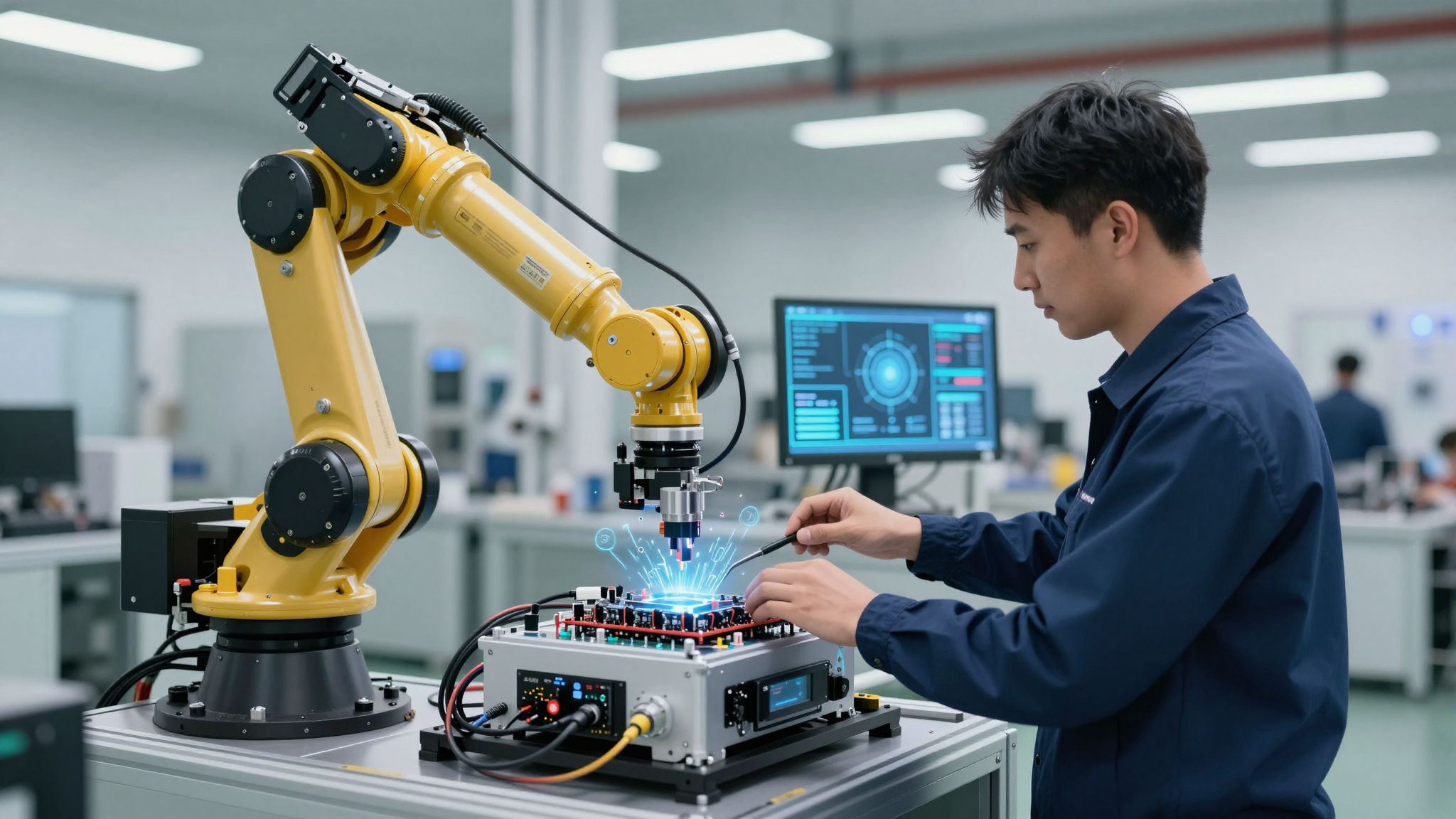
Table of Contents
- Understanding Hyperautomation: What It Is and Why It Matters
- The Building Blocks of Hyperautomation: AI, RPA, and More
- Hyperautomation in Action: Real-World Examples and Case Studies
- The Impact of Hyperautomation on the Workforce: Job Displacement and New Opportunities
- Overcoming the Challenges of Hyperautomation Implementation
- The Role of Low-Code/No-Code Platforms in Democratizing Hyperautomation
- Hyperautomation and the Future of Business: Predictions for 2026 and Beyond
- Preparing for the Hyperautomation Revolution: Skills and Strategies for Success
📋 Quick Navigation
- 1. Understanding Hyperautomation: What It Is and Why It Matters
- 2. The Building Blocks of Hyperautomation: AI, RPA, and More
- 3. Hyperautomation in Action: Real-World Examples and Case Studies
- 4. The Impact of Hyperautomation on the Workforce: Job Displacement and New Opportunities
- 5. Overcoming the Challenges of Hyperautomation Implementation
- 6. The Role of Low-Code/No-Code Platforms in Democratizing Hyperautomation
- 7. Hyperautomation and the Future of Business: Predictions for 2026 and Beyond
Understanding Hyperautomation: What It Is and Why It Matters
Hyperautomation. It sounds like something straight out of a science fiction movie, doesn't it? But trust me, it's very real, and it's poised to completely reshape the business landscape by 2026. In essence, hyperautomation is the strategic application of advanced technologies like artificial intelligence (AI), robotic process automation (RPA), machine learning (ML), and other sophisticated tools to automate as many business processes as possible. It's not just about automating individual tasks; it's about creating an end-to-end, intelligent automation ecosystem that can drive efficiency, agility, and innovation across the entire organization.
Think of it this way: RPA is like a worker diligently performing repetitive tasks, while AI is the manager analyzing data, making decisions, and optimizing processes. Hyperautomation brings these two together, along with other technologies, to create a super-charged, self-improving automation engine. The ultimate goal? To enable businesses to operate with unprecedented speed, efficiency, and intelligence, giving them a significant competitive advantage in the rapidly evolving marketplace. Why does it matter? Because businesses that fail to embrace hyperautomation risk falling behind, becoming less competitive, and ultimately, becoming obsolete.
| Feature | Traditional Automation | Hyperautomation |
|---|---|---|
| Scope | Automates individual tasks | Automates end-to-end processes |
| Technology | Rule-based systems, simple scripts | AI, RPA, ML, OCR, iBPMS, etc. |
| Intelligence | Limited; follows pre-defined rules | High; learns, adapts, and optimizes |
| Scalability | Difficult to scale | Highly scalable across the enterprise |
| Business Impact | Incremental improvements | Transformational; drives significant ROI |
The shift towards hyperautomation is fueled by a confluence of factors, including the increasing availability of affordable AI tools, the growing demand for faster and more efficient business processes, and the need for organizations to adapt to rapidly changing market conditions. By 2026, we'll see hyperautomation become a mainstream practice, with businesses of all sizes leveraging its power to streamline operations, improve customer experiences, and unlock new revenue streams.
Hyperautomation is not just about automating tasks; it's about creating an intelligent automation ecosystem that drives efficiency, agility, and innovation across the entire organization.
The Building Blocks of Hyperautomation: AI, RPA, and More
So, what exactly goes into building a hyperautomation system? It's not just one technology; it's a combination of several, working together in harmony. Let's break down the key components:
* Robotic Process Automation (RPA): This is the foundation of many hyperautomation initiatives. RPA involves using software robots ("bots") to automate repetitive, rule-based tasks, such as data entry, invoice processing, and customer service inquiries. Think of it as the digital equivalent of an office worker, tirelessly performing mundane tasks so humans can focus on more strategic work.
* Artificial Intelligence (AI): AI provides the brains behind the brawn. It enables hyperautomation systems to analyze data, make decisions, and learn from experience. Key AI technologies used in hyperautomation include:
* Machine Learning (ML): Allows systems to learn from data without being explicitly programmed.
* Natural Language Processing (NLP): Enables systems to understand and process human language.
* Computer Vision: Allows systems to "see" and interpret images and videos.
* Intelligent Business Process Management Systems (iBPMS): These platforms provide a framework for designing, managing, and optimizing complex business processes. They often include features like process mining, decision modeling, and real-time analytics.
* Optical Character Recognition (OCR): OCR technology converts scanned documents and images into machine-readable text, enabling automation systems to process unstructured data.
* Low-Code/No-Code Platforms: These platforms allow citizen developers to build and deploy automation solutions without requiring extensive coding skills, democratizing access to hyperautomation technologies.
It's the strategic combination of these technologies that unlocks the true potential of hyperautomation. By seamlessly integrating AI, RPA, and other tools, businesses can create intelligent automation systems that are capable of handling even the most complex and dynamic business processes.
| Technology | Description | Example Use Case |
|---|---|---|
| RPA | Automates repetitive, rule-based tasks | Automating invoice processing |
| Machine Learning | Enables systems to learn from data | Predicting customer churn |
| Natural Language Processing | Understands and processes human language | Automating customer service chatbots |
| Computer Vision | "Sees" and interprets images/videos | Automating quality control inspections |
| iBPMS | Manages and optimizes business processes | Orchestrating end-to-end order fulfillment |
Don't just focus on implementing individual automation technologies. Think about how you can integrate them to create a holistic, end-to-end automation solution.
Hyperautomation in Action: Real-World Examples and Case Studies
Okay, so we know what hyperautomation is and what technologies are involved. But what does it actually look like in practice? Let's take a look at some real-world examples and case studies:
* Healthcare: A large hospital system implemented hyperautomation to streamline its patient admission process. By combining RPA, NLP, and machine learning, the system can automatically extract patient information from electronic health records, verify insurance coverage, and schedule appointments. This has reduced the time it takes to admit a patient by 50% and has freed up staff to focus on providing better patient care.
* Financial Services: A major bank used hyperautomation to automate its loan origination process. The system uses OCR to extract data from loan applications, AI to assess credit risk, and RPA to generate loan documents and disburse funds. This has reduced the loan approval time from several days to just a few hours, significantly improving customer satisfaction.
* Retail: An e-commerce company implemented hyperautomation to optimize its supply chain. The system uses machine learning to predict demand, RPA to automate order fulfillment, and computer vision to monitor inventory levels. This has reduced inventory costs by 20% and has improved order accuracy.
* Manufacturing: A manufacturing plant used hyperautomation to automate its quality control process. The system uses computer vision to inspect products for defects, AI to analyze defect patterns, and RPA to trigger corrective actions. This has reduced defect rates by 30% and has improved product quality.
These are just a few examples of how hyperautomation is being used to transform businesses across various industries. The potential applications are virtually limitless, and as the technology continues to evolve, we can expect to see even more innovative uses emerge.
| Industry | Process | Technologies Used | Benefits |
|---|---|---|---|
| Healthcare | Patient Admission | RPA, NLP, ML | Reduced admission time, improved patient care |
| Financial Services | Loan Origination | OCR, AI, RPA | Faster loan approvals, improved customer satisfaction |
| Retail | Supply Chain Optimization | ML, RPA, Computer Vision | Reduced inventory costs, improved order accuracy |
| Manufacturing | Quality Control | Computer Vision, AI, RPA | Reduced defect rates, improved product quality |
Don't underestimate the importance of process discovery and analysis. Before you start automating, make sure you have a deep understanding of the processes you're trying to improve.
The Impact of Hyperautomation on the Workforce: Job Displacement and New Opportunities
Let's address the elephant in the room: What impact will hyperautomation have on the workforce? The truth is, it's a mixed bag. On the one hand, hyperautomation will undoubtedly lead to job displacement in certain areas, particularly those involving repetitive, rule-based tasks. As machines become more capable of performing these tasks, fewer humans will be needed to do them.
In the summer of 2024, I saw firsthand the anxiety among my colleagues at a large accounting firm as RPA began to automate many of the tasks they had been performing for years. It was a scary time, and many people were worried about their job security. The reality? Some were let go. It was a total waste of money for some to pursue hyperautomation projects without preparing their workforce.
However, it's not all doom and gloom. Hyperautomation will also create new opportunities for workers with the right skills. As machines take over the mundane tasks, humans will be freed up to focus on more strategic, creative, and complex work. This will require workers to develop new skills in areas such as:
* AI and Machine Learning: Developing, implementing, and maintaining AI-powered systems.
* Data Analysis: Extracting insights from data to improve business processes.
* Process Automation: Designing and implementing automated workflows.
* Change Management: Helping organizations adapt to new technologies and processes.
The key to navigating this changing landscape is to embrace lifelong learning and to continuously develop new skills that are in demand. Businesses also have a responsibility to invest in training and upskilling programs to help their employees adapt to the new world of work.
| Impact | Description | Examples |
|---|---|---|
| Job Displacement | Automation of repetitive tasks | Data entry clerks, invoice processors |
| New Opportunities | Creation of new roles requiring specialized skills | AI specialists, data scientists, automation engineers |
| Skill Shift | Increased demand for skills like critical thinking, problem-solving, and creativity | Business analysts, project managers, consultants |
| Increased Productivity | Automation of tasks leads to higher efficiency and output | All industries benefit from increased productivity |
Hyperautomation will create both challenges and opportunities for the workforce. The key is to embrace lifelong learning and to develop new skills that are in demand.
Overcoming the Challenges of Hyperautomation Implementation
Implementing hyperautomation is not a walk in the park. It presents a number of challenges that businesses need to be aware of and prepared to address. Some of the key challenges include:
* Complexity: Hyperautomation involves integrating multiple technologies, which can be complex and challenging. Businesses need to have a clear understanding of how these technologies work together and how to integrate them effectively.
* Data Quality: AI and machine learning algorithms rely on high-quality data to function effectively. If the data is inaccurate or incomplete, the results will be unreliable. Businesses need to invest in data governance and data quality initiatives to ensure that their data is accurate and reliable.
* Skills Gap: There is a shortage of skilled professionals with the expertise to design, implement, and maintain hyperautomation systems. Businesses need to invest in training and upskilling programs to develop the necessary skills in-house.
* Security Risks: Hyperautomation systems can be vulnerable to security threats, such as data breaches and cyberattacks. Businesses need to implement robust security measures to protect their systems and data.
* Change Management: Implementing hyperautomation requires significant organizational change, which can be difficult to manage. Businesses need to have a clear change management plan in place to ensure that employees are on board and that the transition is smooth.
To overcome these challenges, businesses need to take a strategic and holistic approach to hyperautomation implementation. This includes:
* Developing a clear vision and strategy: Define the goals of the hyperautomation initiative and how it aligns with the overall business strategy.
* Building a strong team: Assemble a team of experts with the necessary skills and experience.
* Investing in data governance and data quality: Ensure that the data is accurate, reliable, and secure.
* Implementing robust security measures: Protect the systems and data from security threats.
* Developing a comprehensive change management plan: Ensure that employees are on board and that the transition is smooth.
| Challenge | Description | Mitigation Strategy |
|---|---|---|
| Complexity | Integrating multiple technologies | Develop a clear architecture and integration plan |
| Data Quality | Inaccurate or incomplete data | Implement data governance and data quality initiatives |
| Skills Gap | Shortage of skilled professionals | Invest in training and upskilling programs |
| Security Risks | Vulnerability to cyberattacks | Implement robust security measures |
| Change Management | Resistance to change from employees | Develop a comprehensive change management plan |

Start small and iterate. Don't try to automate everything at once. Focus on automating a few key processes first and then gradually expand the scope of the initiative.

The Role of Low-Code/No-Code Platforms in Democratizing Hyperautomation
One of the most exciting trends in hyperautomation is the rise of low-code/no-code platforms. These platforms allow citizen developers – individuals with limited coding skills – to build and deploy automation solutions without requiring extensive programming knowledge.
Low-code/no-code platforms democratize access to hyperautomation technologies, making them accessible to a wider range of businesses and individuals. They also accelerate the development process, allowing businesses to quickly build and deploy automation solutions to address specific needs.
By 2026, low-code/no-code platforms will play a critical role in driving the adoption of hyperautomation across various industries. They will empower businesses to build custom automation solutions that are tailored to their specific needs, without having to rely on expensive and scarce IT resources.
| Feature | Traditional Development | Low-Code/No-Code |
|---|---|---|
| Coding Skills | Requires extensive coding skills | Limited or no coding required |
| Development Speed | Slow and time-consuming | Fast and agile |
| Cost | High development costs | Lower development costs |
| Accessibility | Limited to skilled developers | Accessible to citizen developers |
| Customization | Highly customizable | Customizable, but with some limitations |
However, be warned. The learning curve for some of these platforms can be steep. It can be a total time waste if you don't have the right guidance.
Low-code/no-code platforms democratize access to hyperautomation technologies, empowering citizen developers to build custom automation solutions.
Hyperautomation and the Future of Business: Predictions for 2026 and Beyond
So, what does the future hold for hyperautomation? Here are a few predictions for 2026 and beyond:
* Hyperautomation will become mainstream: By 2026, hyperautomation will be a mainstream practice, with businesses of all sizes leveraging its power to streamline operations, improve customer experiences, and unlock new revenue streams.
* AI will play an even greater role: AI will become even more sophisticated and will play an even greater role in hyperautomation. We will see AI-powered systems that are capable of making more complex decisions and of adapting to changing circumstances in real-time.
* Low-code/no-code platforms will continue to gain traction: Low-code/no-code platforms will continue to gain traction, making hyperautomation accessible to a wider range of businesses and individuals.
🔗 Recommended Reading
- 📌 Beyond RPA: AI-Orchestrated Automation's Business Process Revolution in 2026
- 📌 Navigating the AI Productivity Paradox: Boosting Output in the 2026 Workplace
- 📌 AI Predictions for 2026: What's Actually Going to Change
- 📌 AI Cognitive Overload: Expert Solutions to Prevent Burnout in the Age of Hyper-Productivity (2026)
- 📌 AI-Enhanced Focus Strategies for Deep Work in 2026: Cutting Through the Hype